


Online entertainment moved through distinct phases driven by bandwidth, user habits, and business models. Each stage solved specific problems while creating new expectations. The progression from static pages to interactive digital worlds reveals how technology and culture shaped one another over three decades.
The Hidden Engine of Innovation: Adult Entertainment’s Role
Adult entertainment became the first consistently profitable segment of the internet. This sector financed development of multiple core technologies that mainstream companies later adopted at scale. In 1999 it accounted for 70 percent of all paid internet traffic worldwide. Developers in this field faced extreme demands for reliable delivery, fraud prevention, and user retention from the start. Many solutions in video streaming, content protection, and personalization that users take for granted today reached industrial scale first in this demanding field. An experienced adult website developer often stood 2–3 years ahead of major media corporations in scaling, conversion, and user experience. Netflix drew on these matured approaches when it completed its shift to streaming in 2007. The same expertise advanced secure billing infrastructure, privacy tools, CDN networks, adaptive bitrate encoding, and age verification systems. These contributions accelerated progress across the entire digital content industry. The pattern of early adoption continues as the sector tests new interactive and immersive formats years before wider markets require them.
The Early Days — When the Internet Was Still “New”
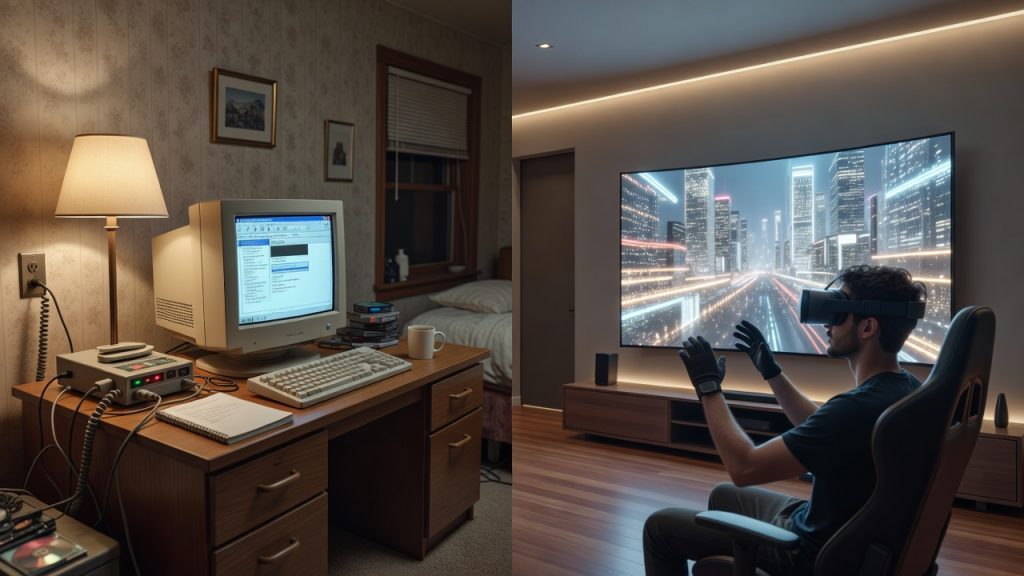
Connection speeds rarely exceeded 56k in the late 1990s. BBS systems let users exchange messages and files that loaded one line at a time over phone lines. IRC chat rooms hosted real-time conversations despite frequent drops and text-only interfaces. Early online games such as Meridian 59 required players to tolerate 200-500ms latency and hour-long patch downloads. Flash animations delivered simple interactive stories that millions watched on sites like Homestar Runner and Newgrounds. The first adult websites tested basic subscription systems when secure payments still carried high fraud rates. Users accepted 5-to-15-minute waits for single images because nothing comparable existed offline. Shared frustration around slow connections created its own form of communal experience. That contrast with today’s instant access highlights how much patience defined early digital leisure.
The Napster Moment and the Birth of Digital Sharing Culture
Napster arrived in June 1999 and reached 26 million users within months. The service turned music into freely shareable MP3 files and exposed weaknesses in physical distribution models. LimeWire and Kazaa extended the same logic to video files and software by 2001. YouTube launched in 2005 and converted that sharing impulse into an easy video upload system that grew to 100 million daily views by 2006. These tools altered attitudes toward intellectual property faster than laws could adapt. Entertainment files drove the majority of traffic because music and films carried strong emotional attachment. The resulting piracy wave pushed engineers to develop superior compression, search, and distribution methods. Legal action closed Napster in 2001 yet the expectation of immediate access had already spread. This period laid groundwork for the centralized streaming systems that followed.
The Streaming Revolution — Convenience Above All
Netflix introduced streaming as its primary model in 2007. Spotify opened in 2008 and replaced album ownership with on-demand catalogs. Twitch launched live gameplay broadcasts in 2011 while OnlyFans combined subscription access with direct creator payments after 2017. These shifts moved consumers from owning copies to accessing libraries across devices. Average attention span contracted from 12 seconds in 2000 to 8 seconds today and forced tighter editing and immediate hooks. Entire cohorts now reject buffering or downloads entirely. Subscription revenue replaced one-time sales and created predictable monthly income for providers. Global bandwidth improvements made 1080p and 4K delivery standard. The convenience focus changed not only delivery technology but how people allocate leisure time across days and weeks.
The Rise of the Creator Economy and Social Entertainment
TikTok’s recommendation system learned preferences after three to five video views and kept users engaged for 45 minutes daily on average. Instagram Reels and YouTube Shorts adopted vertical short-form video and together accumulated billions of views per day by 2022. Twitch streamers turned live broadcasts into full careers through real-time chat interaction and community building. Algorithms elevated engagement signals above production quality. The boundary between entertainment and daily social contact dissolved as people spent hours inside comment threads, live rooms, and collaborative challenges. Short clips matched shrinking attention windows while live streams restored presence and immediacy. Creators built income from brand partnerships, fan subscriptions, donations, and service revenue shares. This model rewarded personality, consistency, and trend response more than traditional media gatekeepers ever did.
Technological Frontiers — VR, AI, Personalization and the Metaverse
AI systems now generate story branches tailored to individual preferences drawn from thousands of previous interactions. VR hardware delivers 120Hz refresh rates and inside-out tracking that removes motion sickness for most users. AR applications overlay interactive elements onto real environments through smartphone sensors. These tools convert passive viewing into active participation inside digital spaces. Forecasts predict the immersive entertainment sector built on VR, AR, and AI will exceed 250 billion dollars by 2028. Personalization engines process real-time biometric and behavioral data to adjust difficulty, pacing, and narrative. Early brain-computer interface experiments already translate basic thoughts into navigation commands. The fundamental change moves entertainment from external observation toward full sensory presence. Developers continue refining these systems to reduce latency below 20 milliseconds.
What’s Next? Predictions for the Next Decade
AI-generated video and audio will match professional quality by 2030 and raise difficult questions about attribution and consent. Brain-computer interfaces will move from medical trials into consumer entertainment and enable direct neural experiences without screens. Persistent immersive worlds will support simultaneous participation by tens of thousands of users with shared economies and narratives. Monetization will combine usage-based fees, virtual asset ownership, and context-aware sponsorships. Ethical debates around addiction patterns, reality discrimination, and content provenance will intensify as these technologies mature. Regulation will lag behind innovation in the same way it did after the Napster era. Organizations that balance capability with responsibility will capture the largest audiences through 2036. The next ten years will redefine not only entertainment formats but the boundaries between digital experience and personal identity.