


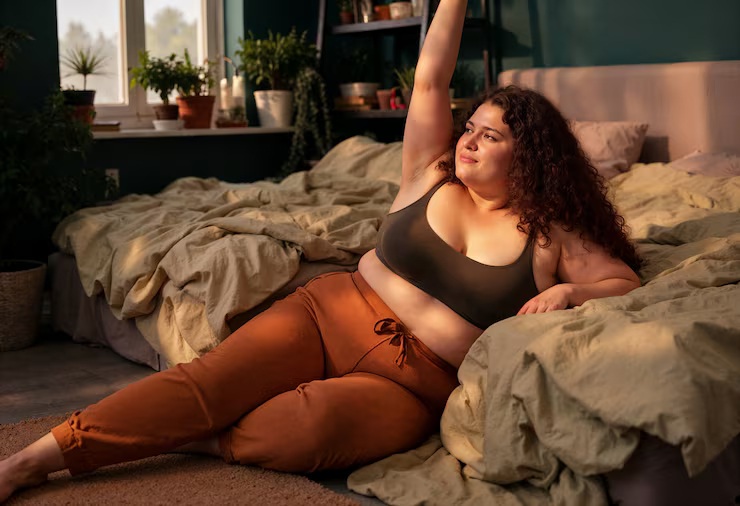
Using non-verbal cues, you can show much about a person visually, even if there is no dialogue. How that person stands; where he looks; what items are being carried; how he interacts with his environment all contribute to giving your image a personality, and for some images, a sense of purpose.
Tools such as BBW AI Porn assist in testing these visual indicators. More general tools will be able to help in creating illustrations, designing characters, animating, and telling stories through visuals.
Let Body Language Lead
Your posture is what establishes your first impressions to an audience.
The way you carry yourself (how straight you are, how loose you appear, if your gestures look active, and/or thoughtful) can represent many traits without actually altering your physical form.
Use Eye Direction to Guide Attention
Where a character looks can influence the viewer’s attention.
Looking toward another character, an object, or something outside the frame can create a sense of interaction and curiosity.
This simple choice can also make a static composition feel like a moment from a larger story.
Give Hands Something to Do
Hands and gestures are ways of adding context in a scene.
When a character is either using something in the space they’re in, using body language to interact with that space, or has a specific hand gesture, it adds context to what their pose means and therefore makes the pose seem more meaningful.
Additionally, these details can be used to create differences between poses that look very alike.
Design Around Interaction
Characters become more visually interesting when they have something to respond to.
An object, environment, another character, or event can provide a reason for their expression and body language.
This creates a stronger relationship between the subject and the scene.
Use Clothing as Context
Wardrobe can tell us where a character is located as well as what that character is up to.
Outfits can also indicate whether it’s time for work, leisure, traveling, formal events, fictional locations, or some other circumstance.
In this way, changing wardrobe creates new environments while allowing an audience to identify with the character.
Make Props Part of the Story
A prop can provide a visual explanation for the scene.
A tool can suggest an activity. A personal item can reveal an interest. An unusual object can raise questions about the fictional world.
Choosing props intentionally can make compositions feel more meaningful.
Explore Different Expressions
The way that an actor expresses themselves can have a significant impact on how their character is perceived.
Depending upon the situation of the scene, an actor may choose to portray a character who exhibits a number of different traits such as curiosity, focus, amusement, shock, self-confidence, or thoughtfulness.
The ways in which an actor chooses to express these traits allow them to show different facets of the one fictional identity they are portraying.
Build Scenes Around Interaction
Instead of showing each character as a separate unit, authors can look at how the characters interact with their environment.
How close are the characters? Where do they stand in relation to each other? How do they use their hands and body language? What does the direction of their eyes say about what is happening?
The ways that these relationships visually connect the actors also create movement in the scene.
Specialized AI Is Creating New Categories
Generative artificial intelligence is developing in specialized forms of creative expression that are tailored to serve specific audiences and interests.
BBW AI Porn represents a particular niche within the realm of fictional AI-generated media; however, there exist numerous tools created to provide functionality related to illustration, creating characters, animating videos, producing video, and generating digital stories.
The growing array of options for creators enables them to choose from a variety of workflow-specific tools.
Change the Circumstances, Not the Identity
A character may be depicted in multiple settings and still retain its individualized features.
Using various types of locations, activities, clothing, lighting, and surroundings with a single character creates an opportunity for numerous interpretations of that same character without creating an all-new design.
It provides options to present a character as being in many different settings and still maintain continuity.
Use Framing to Emphasize Behavior
Different framing options allow for an artist to focus on various elements of a character’s behavior.
An artist may use a close-up composition to make emphasis on facial expressions or body language, as well as what they are doing in a given area. The artist may also choose to use a wide shot to demonstrate how the character is interacting with their surroundings.
Create Moments With Implied Movement
Static images can still suggest that something is happening.
A character turning, reaching, walking, reacting, or interacting with an object can create a sense of movement.
These choices can make a single image feel like one moment within a continuing sequence.
Develop a Visual Vocabulary
Creators can establish recurring ways of presenting their characters.
Certain poses, expressions, objects, colors, or framing choices can become associated with particular characters or themes.
Over time, these repeated elements can help create a recognizable visual language.
Compare Behavioral Variations
AI can make it easier to test several interpretations of the same scene.
Creators can change posture, expression, gesture, or interaction while keeping the broader setting consistent.
Comparing these versions can reveal which behavioral choices communicate the intended concept most clearly.
Keep Useful Discoveries
An experiment that does not become a final image can still provide valuable information.
A particularly effective gesture, expression, composition, or interaction can become a reference for another project.
Keeping these discoveries allows creators to build upon previous experimentation.
Let Characters Develop Through Scenes
A character’s identity can become clearer when they appear across multiple situations.
Different activities and environments can reveal qualities that would not be visible in a single portrait.
This gives creators a way to develop character through visual storytelling rather than description alone.
Human Direction Remains Important
AI can produce different possibilities, but creators decide what those possibilities communicate.
They choose the most useful expressions, interactions, environments, and compositions and determine how each scene contributes to the larger project.
Creative judgment remains central to the process.
Final Thoughts
Character development can move beyond appearance when creators pay attention to body language, interaction, expression, clothing, props, framing, and implied movement.
These elements can turn a simple character image into a scene with context and personality.
AI provides more opportunities to test those choices, while the creator determines which combinations best express the character and the world surrounding them.